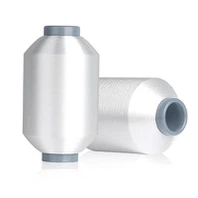
Hot melt yarn has several advantages over traditional fibers in different aspects, including:

1. Bonding ability: Hot melt yarn can be easily bonded to other materials without the need for additional adhesives, improving the efficiency of production processes and reducing the use of harmful chemicals.
2. Strength: Hot melt yarn has high tensile strength and is resistant to breaking, making it ideal for use in high-stress applications.
3. Durability: Hot melt yarn is highly resistant to wear, tear, and abrasion, giving it a longer lifespan than traditional fibers.
4. Water resistance: Hot melt yarn is inherently water-resistant and can maintain its strength and shape even when exposed to moisture.
5. Chemical resistance: Hot melt yarn is resistant to many chemicals, including solvents and acids, making it useful in a wide range of applications.
6. Softness: Hot melt yarn can be produced with different levels of softness, making it ideal for use in textiles and other applications where comfort is important.
7. Versatility: Hot melt yarn can be produced with different colors and levels of translucency, making it a versatile material for a wide range of applications.
Overall, the unique properties of hot melt yarn make it a superior choice over traditional fibers in many applications, especially when high strength, durability, and chemical resistance are required.